Doraemon, Dhaka and One Boy's Dream
"What is your dream?" the boy sitting next to me asked.
"I don't know... What about you?"
"I would like to make Doraemon when I grow up."
"What is that?" I asked cluelessly.
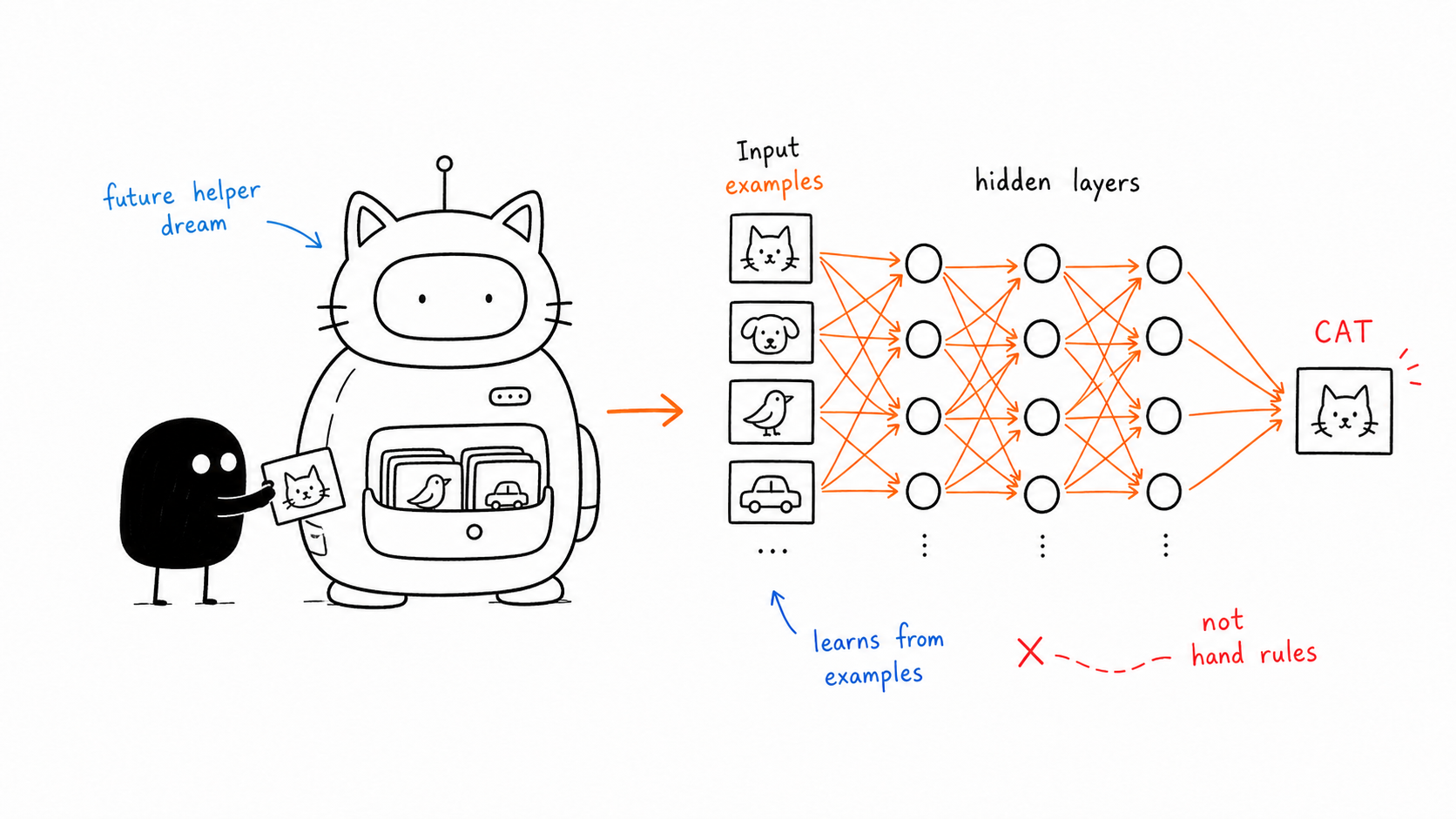
He looked at me with genuine horror. Then he explained that Doraemon was a robot cat from the future. Whenever Nobita got stuck, Doraemon would understand the problem and pull out some impossible gadget from his pocket and help him.
I distinctly remember thinking at that time, "THAT'S IMPOSSIBLE", "YOU ARE STUPID." But instead of saying anything, I just nodded.
That was 2012, when I first came to Dhaka from my village. I was an oddball then, much more odd back then.
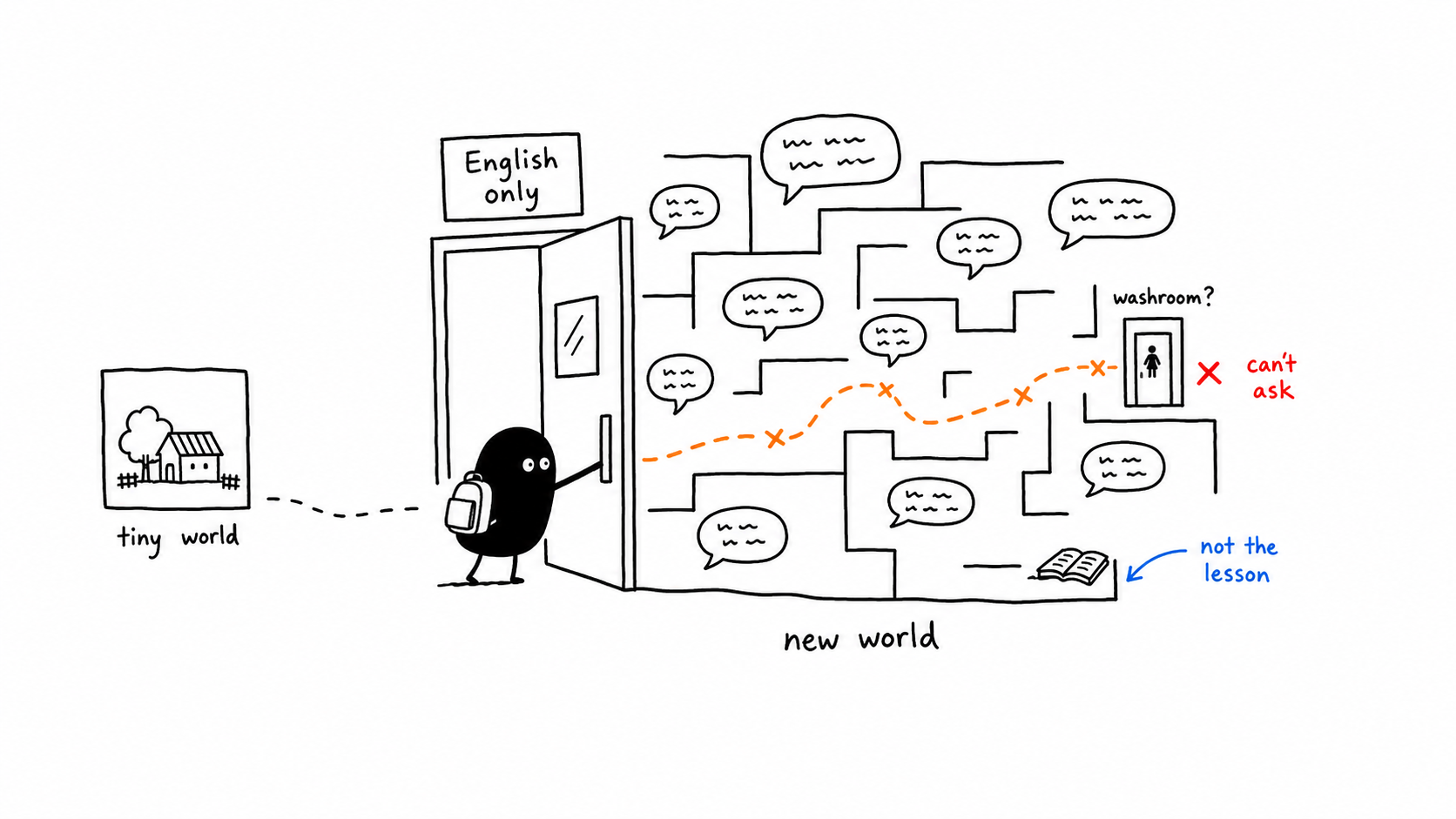
My world was tiny. I did not even know how to speak English. Not a word of it.
So when I joined an English medium school where speaking Bangla was banned, I could not communicate with anyone. I did not understand a single word in class.
For the first six months, I held my pee the entire school day because I did not know how to ask for the washroom.
Anyways, that boy and I became friends. He even showed me where the washroom was.
But this story is not really about that. It is about his dream of making Doraemon.
That was December 2012. Around the same time, something special was happening in Toronto. A few researchers, Alex Krizhevsky, Ilya Sutskever, and Geoffrey Hinton, built a system called AlexNet.
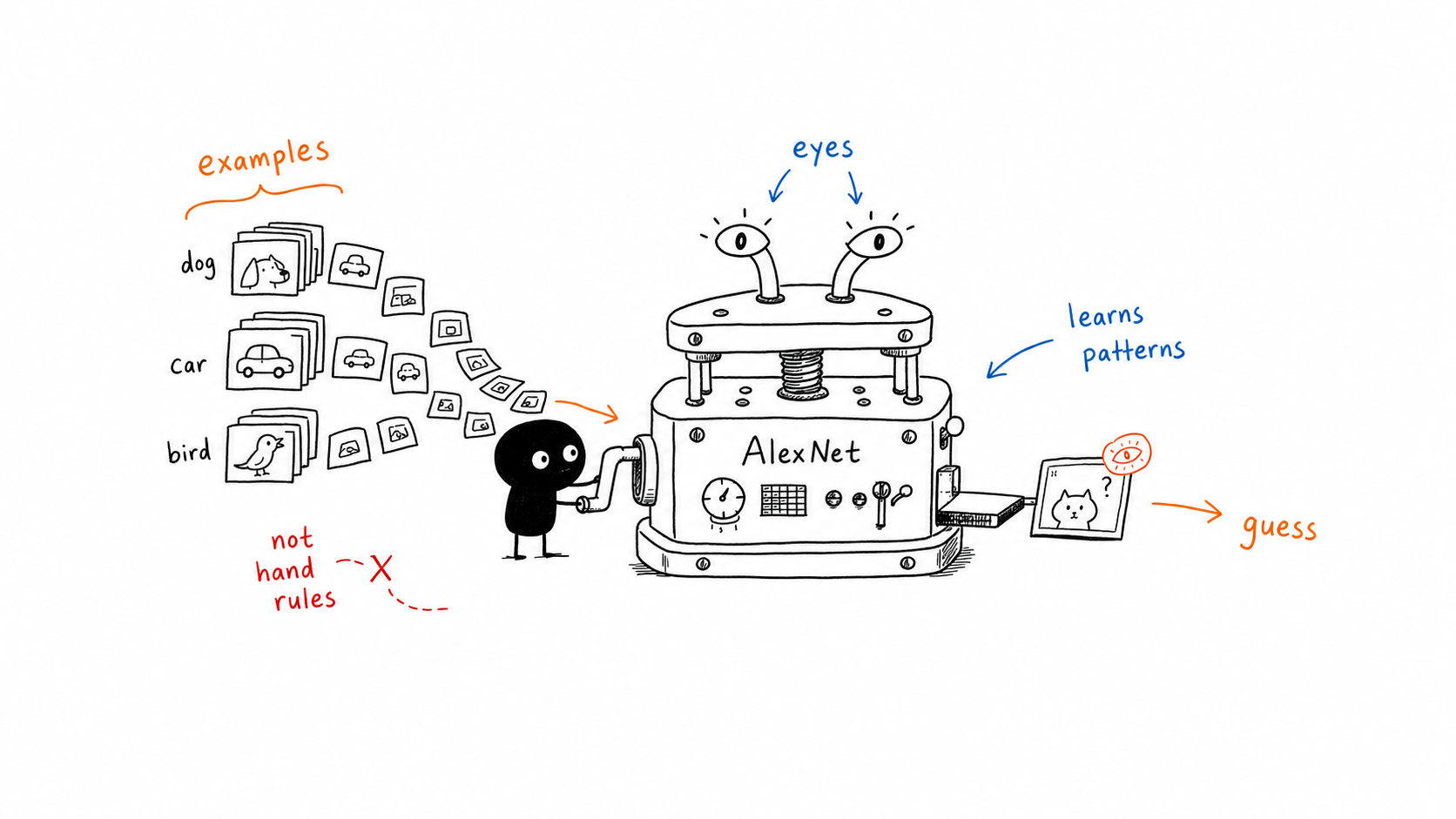
AlexNet did one small Doraemon-like thing. It helped computers see.
Here is what that means. People showed the computer millions of pictures and told it the answer. This is a dog. This is a cat. This is a bird. After seeing enough examples, the computer started guessing new pictures by itself.
That may sound normal now. Our phones unlock by looking at our faces. Apps can look at a reel and tell us what brand of clothes someone is wearing. But in 2012, this was not normal.
For most of computer history, computers only did what humans told them to do. A programmer wrote rules. The machine followed those rules.
But vision is messy.
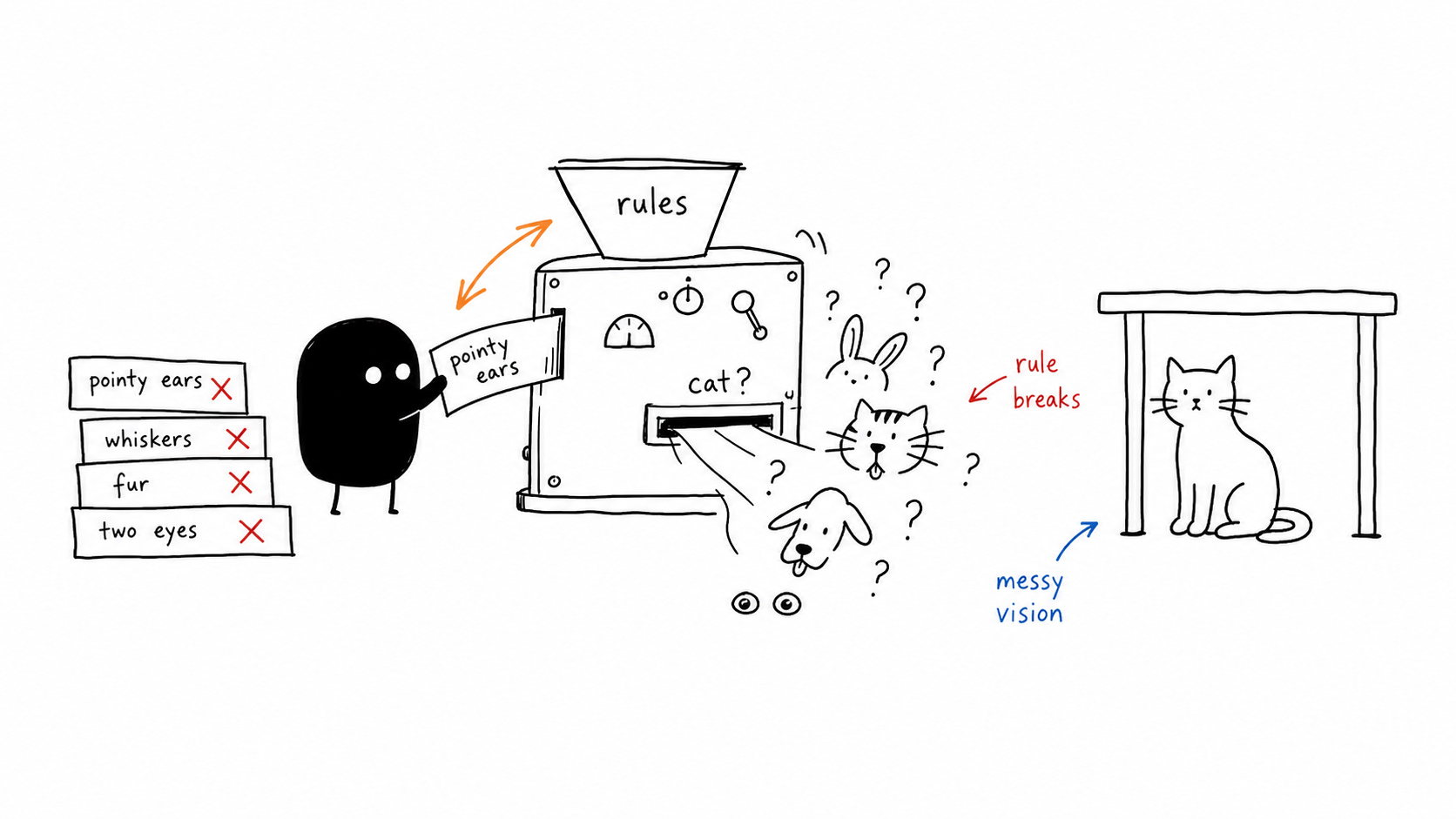
How do you write a rule for "cat"?
Pointy ears? Some dogs have those. Whiskers? Tigers have whiskers too. Fur? Rabbits have fur. Two eyes? Congratulations, you have detected almost every animal in the room.
On the other hand, a child can see a cat under a table, a cat in a cartoon, and a cat sleeping on a chair, and still understand: all of these are cats.
But a computer did not understand like that. Humans had to describe things with rules. And those rules kept breaking.
The problem is not that cats have no pattern. The problem is that the pattern is hard to write as one clean rule.
AlexNet was special because humans did not have to write every rule by hand. They showed it examples. Lots and lots of examples. And the computer slowly learned from those examples.
It was no Doraemon. But it was one small piece of Doraemon.
Eyes.
The idea behind AlexNet was not new. Neural networks had been around since the 1950s. The basic dream was simple: instead of writing every rule by hand, let the machine learn from examples.
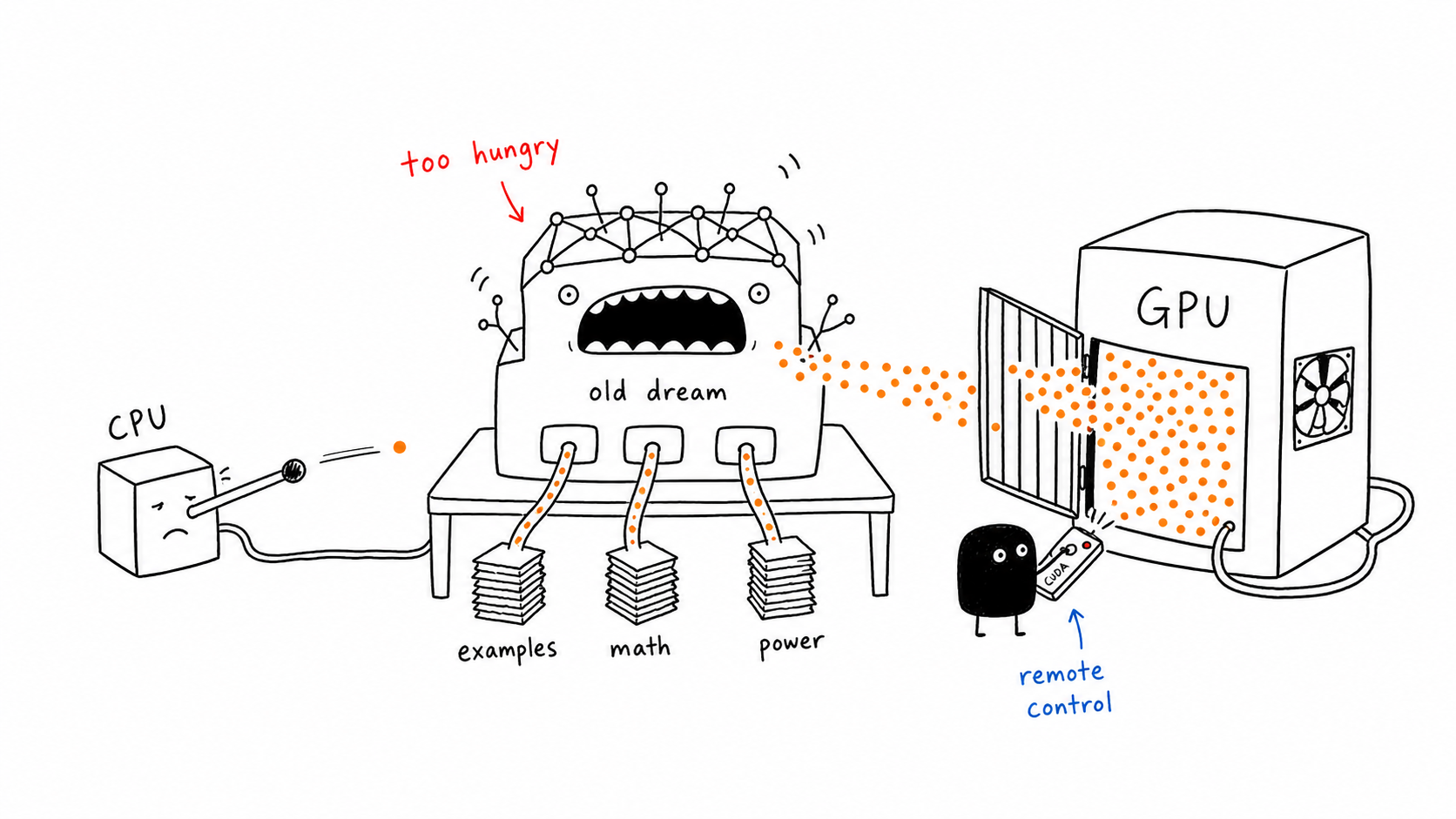
But for a long time, that dream was too hungry. It needed too many examples. It needed too much math. It needed too much computer power.
That is where GPUs came in. Normally, computers use CPUs. A CPU is good at doing one job carefully. A GPU is good at doing many small jobs at once.
AI has a lot of small jobs. Look at this pixel. Adjust this number. Try again. Do that millions of times.
That is why GPUs were perfect for AI.
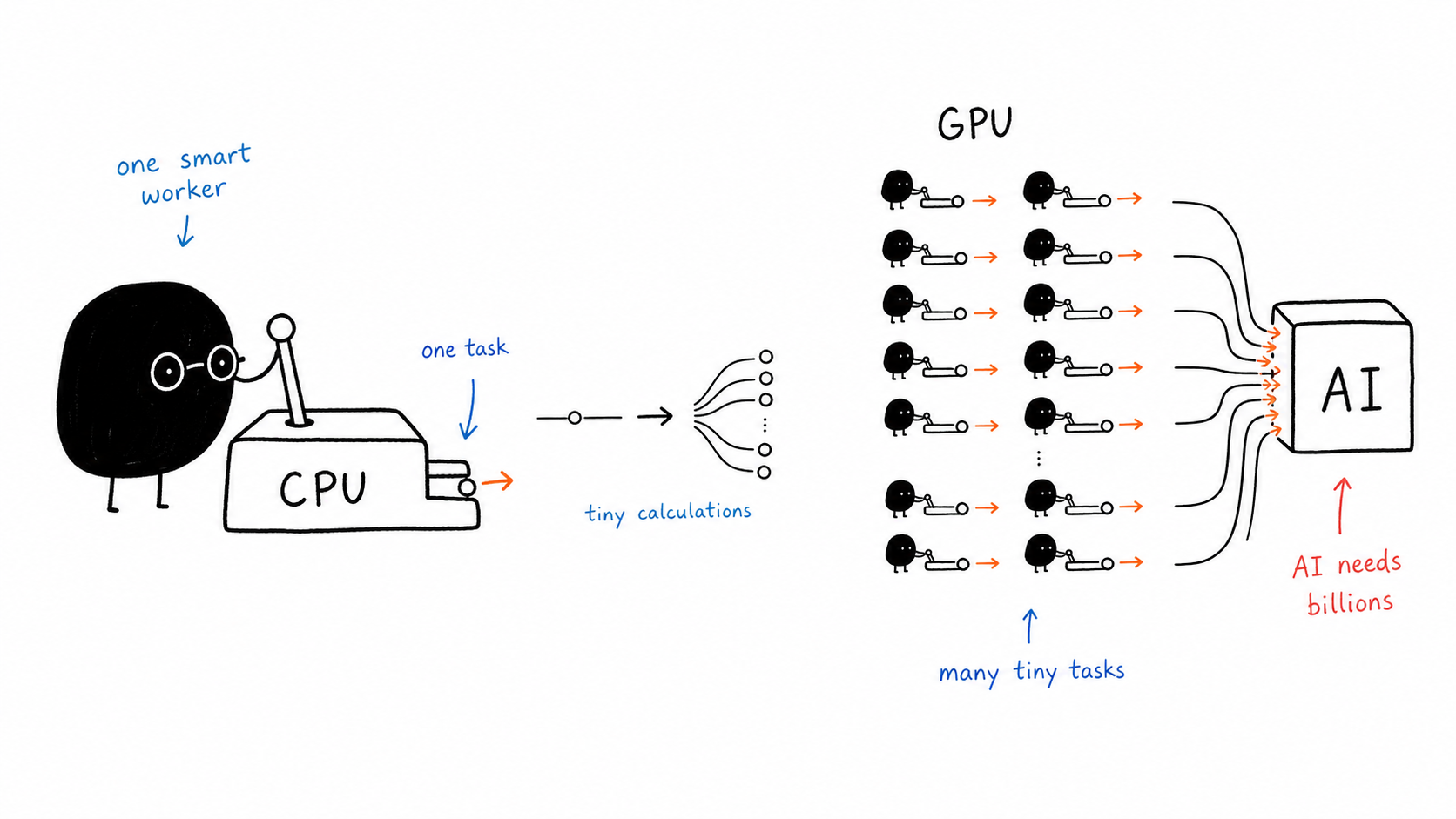
Nvidia first built GPUs for video games. Games needed many tiny calculations. Light, shadows, movement, explosions, all of that.
Researchers noticed something useful. AI also needed many tiny calculations. So they started using GPUs for AI.
But there was a problem. GPUs were built for games, not AI. So using them for AI was painful.
Then Nvidia made CUDA. CUDA made it easier for programmers to tell the GPU what to do. Before CUDA, using a GPU for AI was like trying to control a TV by poking wires inside it.
CUDA gave researchers a remote control.
So when AlexNet came along, it was not just a better idea. It was an old idea finally getting the power it needed.
Neural networks were not new. But AlexNet mattered because the old dream had finally become practical.
Show the machine enough examples. Give it enough computer power. Let it try again and again. And slowly, it can learn patterns humans used to write rules for.
AlexNet did not make Doraemon. But it proved something important.
Machines could learn to see.
That was a big deal.
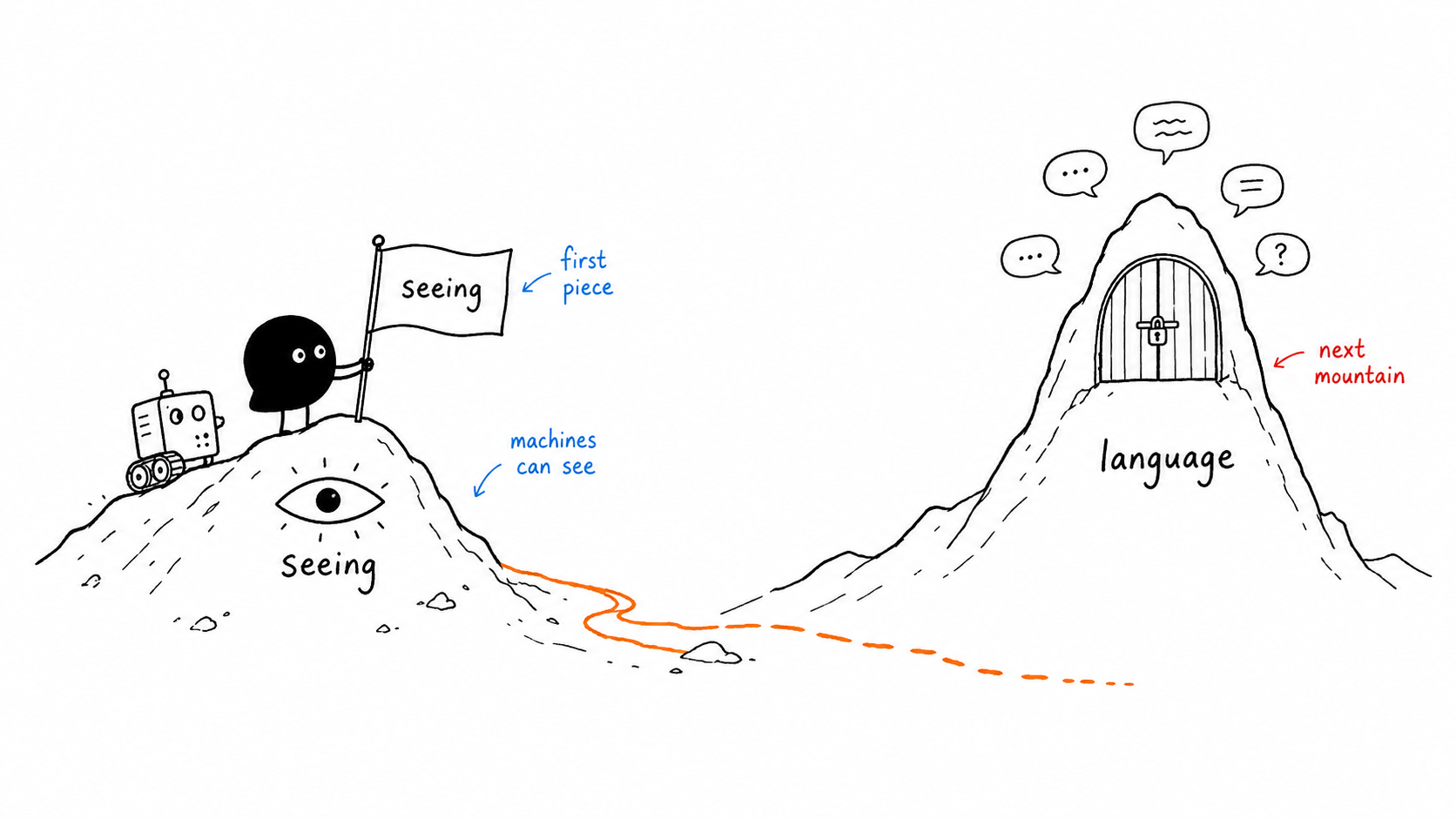
But seeing was only the first mountain, and perhaps the easiest one.
Because Doraemon was never just a pair of eyes.
He could listen, understand Nobita's problems, talk back, and pull out the perfect gadget at the perfect time.
AlexNet helped machines see.
The next mountains were much taller.
We'll climb another in the next post.