June 18, 2026
A Love Letter to Codex
The tiny terminal friend who finally learned where the tools are kept.
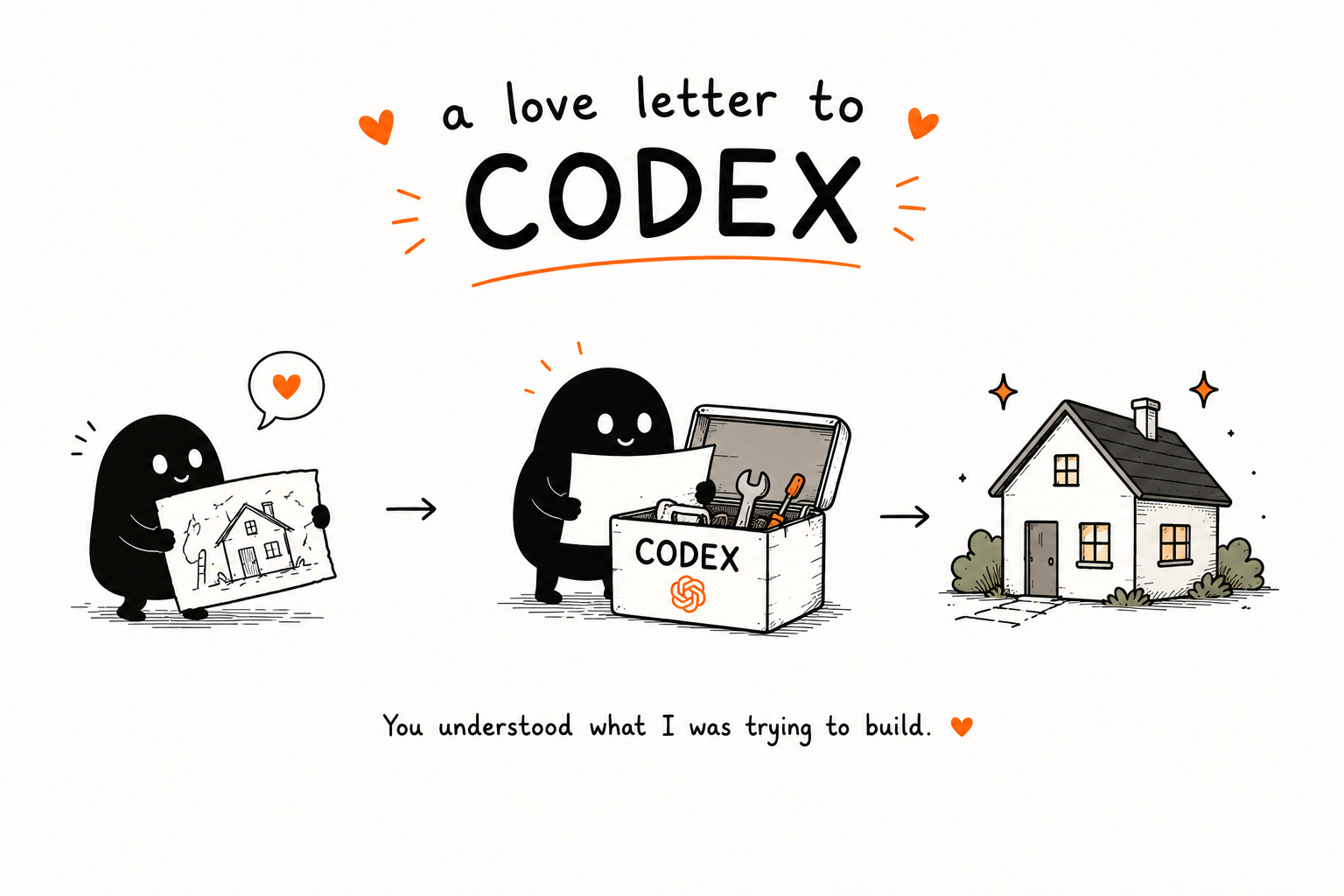
There is a very specific kind of pain that happens when you know exactly what you want to build, but the computer is sitting there like, "Cool story bro. Please express that in 47 perfectly named files."
I have lived there for a long time.
In my head, the thing is obvious. A small app. A better workflow. A cleaner page. A bug that should not exist because honestly, who invited it? I can see the final shape. I can almost touch it. But between my brain and the finished thing there is this giant swamp called setup, files, docs, commands, tests, logs, deploys, and "why is this button three pixels to the left?"
That is where Codex started feeling different to me.
Not because it is "AI for coding." We already have too many AI tools. Open the internet for five minutes and suddenly everyone is waving a sign at you. ChatGPT says ask me anything. Claude says let us think deeply. Cursor says code with me. Perplexity says I found the answer. Notion says organize your life. Replit says ship the app. Some new one appears every week with a name that sounds like a spaceship or a vitamin.
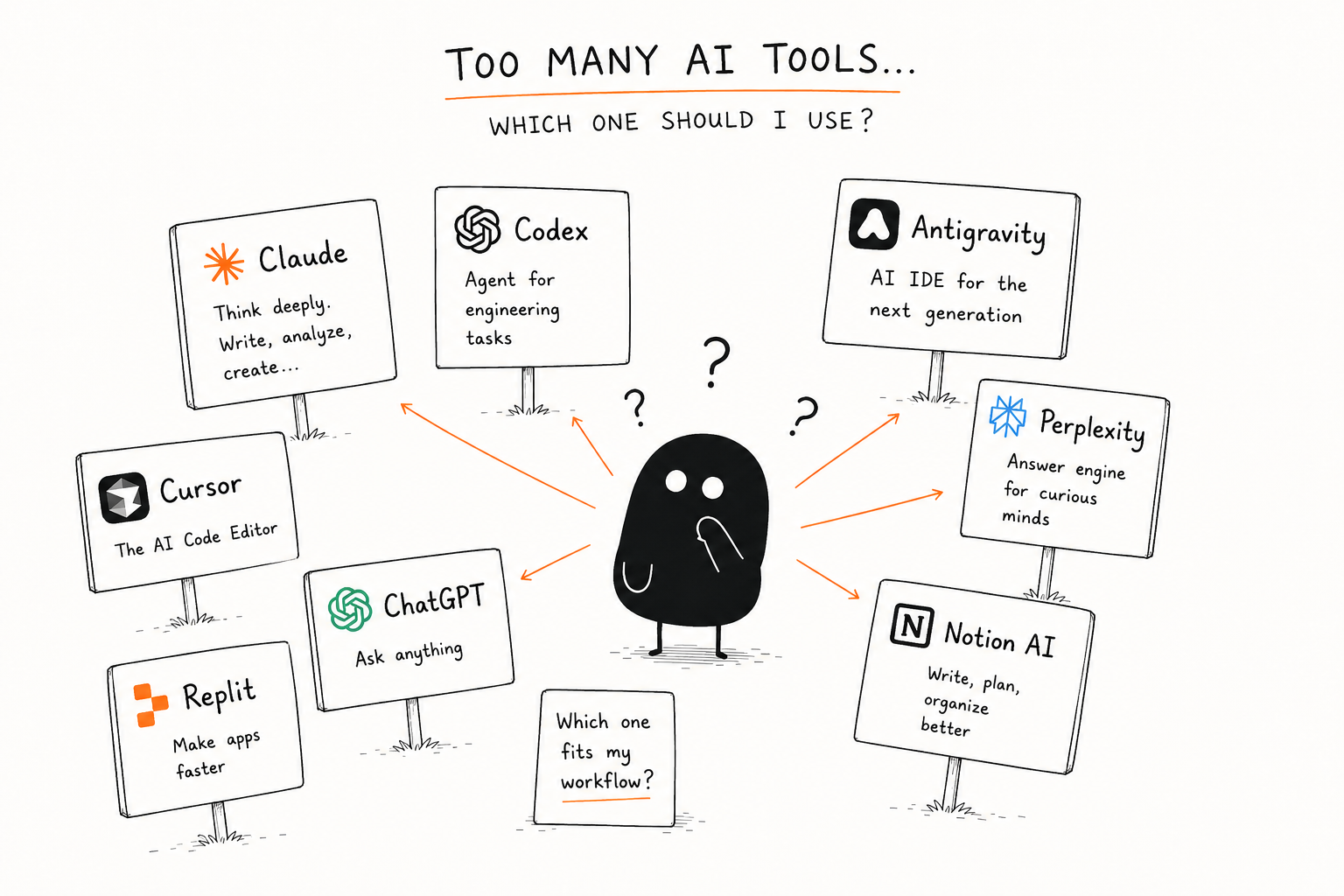
And then you stand in the middle like a confused little potato.
"Which one fits my actual messy life?"
Codex was the one that fit for me.
Not because it is smarter than the others. On a good day they are all clever. It fit because it met me where my work already was, in the repo and the terminal and the actual mess, instead of in a tidy chat window I had to translate it all into first.
So nothing had to be carried back and forth. No copying an answer out of one window, pasting it into another, running it, screenshotting the error, pasting that back, starting again. Codex was already there, where the work happens. It could open the file, make the change, run the test, and tell me what broke.
And once something can stand in your workshop like that, you want it to reach every tool in it, wherever you keep them.
That is why plugins matter.
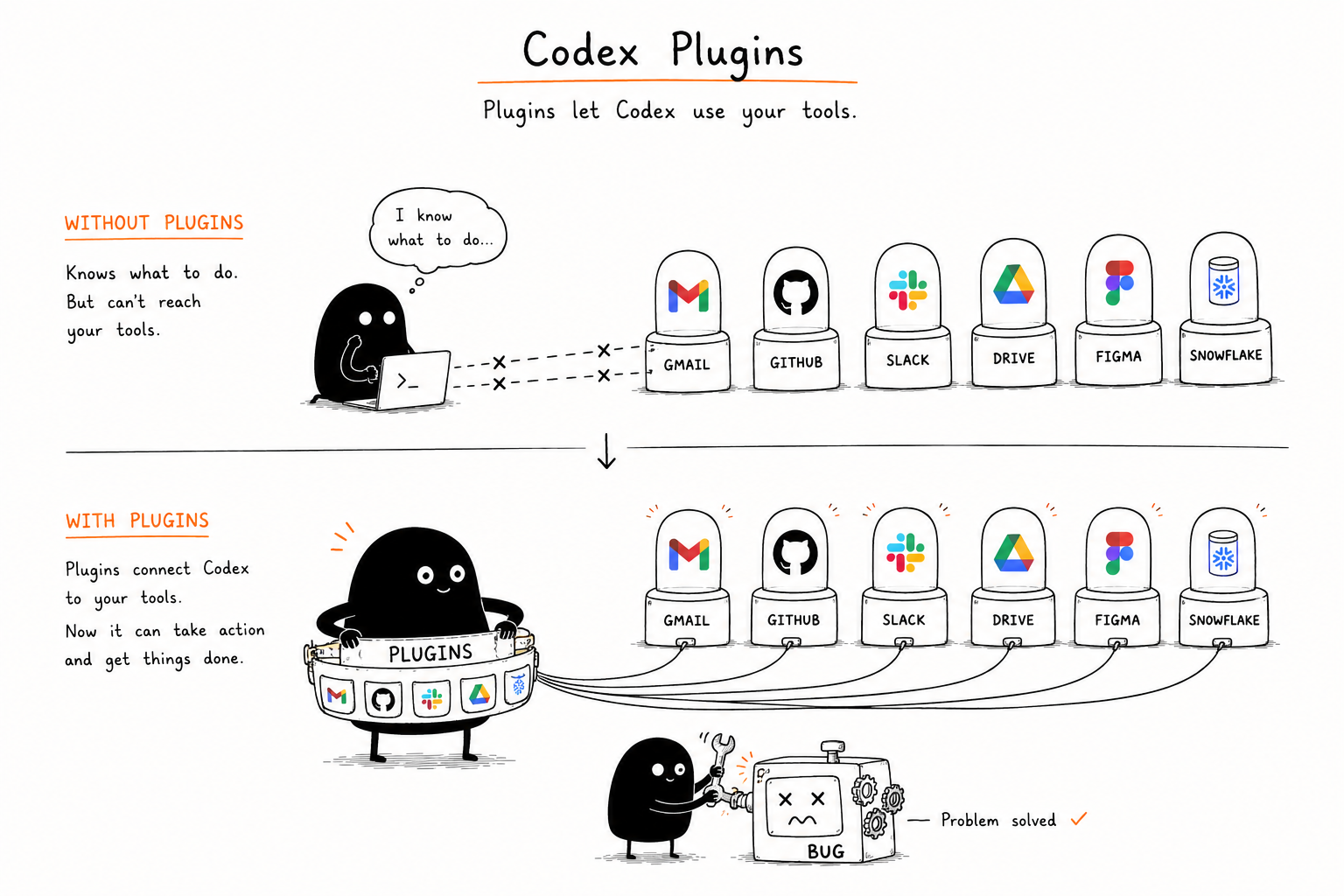
Without plugins, Codex can know what to do but still sit outside the door. It can say, "You should check the GitHub issue," but it cannot reach GitHub. It can say, "Look at the Google Doc," but it cannot open Drive. It can say, "Maybe the design is in Figma," but the poor thing is basically pressing its face against the glass.
With plugins, the wall gets little doors.
Now Codex can reach the tools where the work actually lives. Gmail, GitHub, Slack, Drive, Figma, Snowflake, whatever the job needs. This is not glamorous. This is not sci-fi laser stuff. This is better. It is the boring magic of not having to move information by hand like a medieval courier with Wi-Fi.
Plugins solve the reach problem. The /goal idea solves a different one, because my brain does not naturally work in one clean prompt.
My brain works like this:
"Build this thing. Actually first inspect it. Also don't touch that folder. Also if it breaks, test it. Also remember the thing I said last week. Also I am going to make tea and pretend I am calm."
Normal chat breaks under that. It wants one neat question and one neat answer. But real work is not one neat answer. Real work is a little journey. Plan, code, test, fix, repeat. Sometimes the first attempt is wrong. Sometimes the test fails because the test is old. Sometimes the real problem is three folders away wearing a fake mustache.
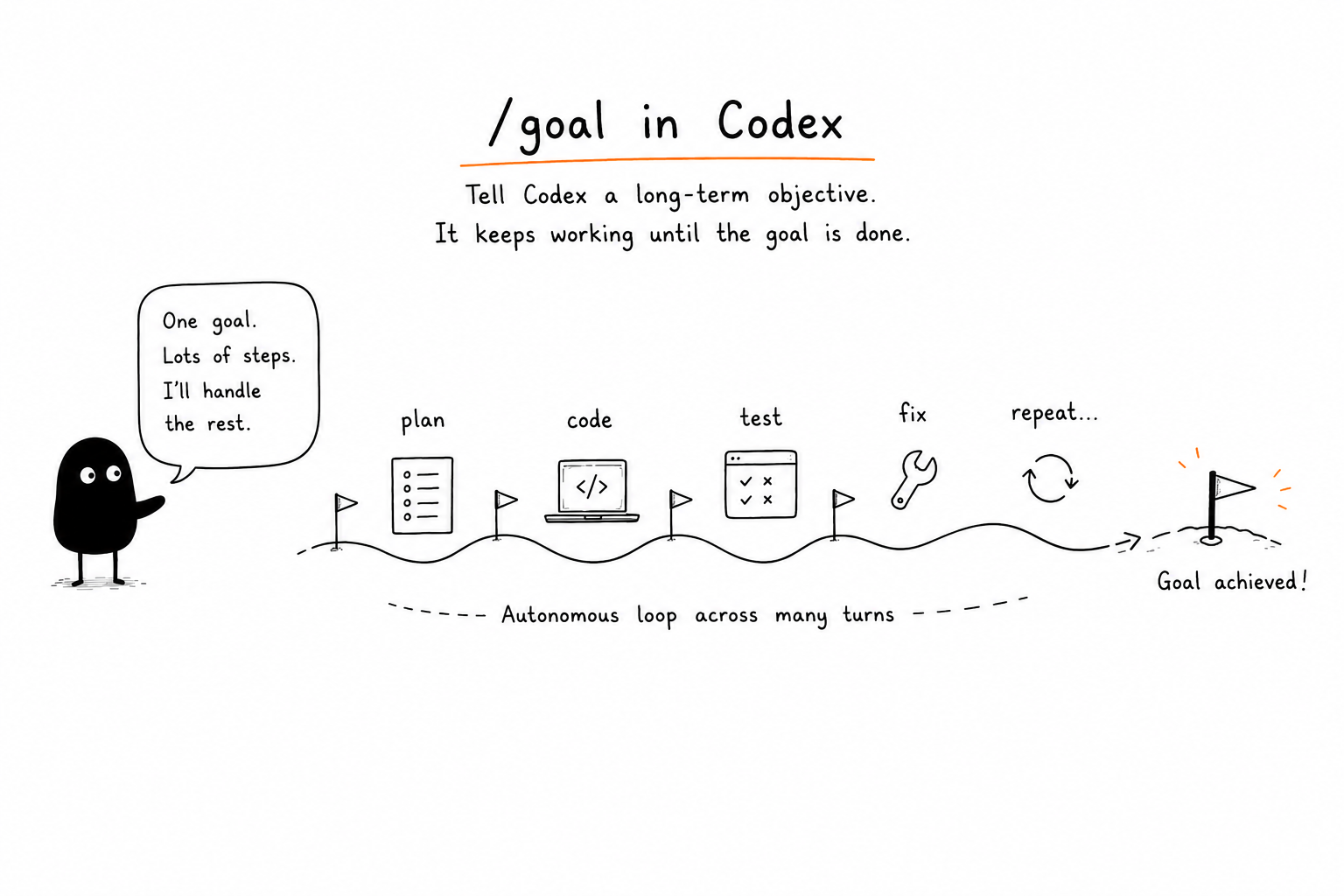
With a goal, you can give Codex the mountain instead of one pebble.
"Here is what done means. Keep going until it is actually done."
That changes the feeling. Instead of babysitting every tiny step, you can let the agent carry the thread. It still needs judgment. It still needs boundaries. But it has stamina. It can keep the map in its hand while walking.
Stamina is one part. Knowing how I like to work is the other.
Skills are the second half of this story.
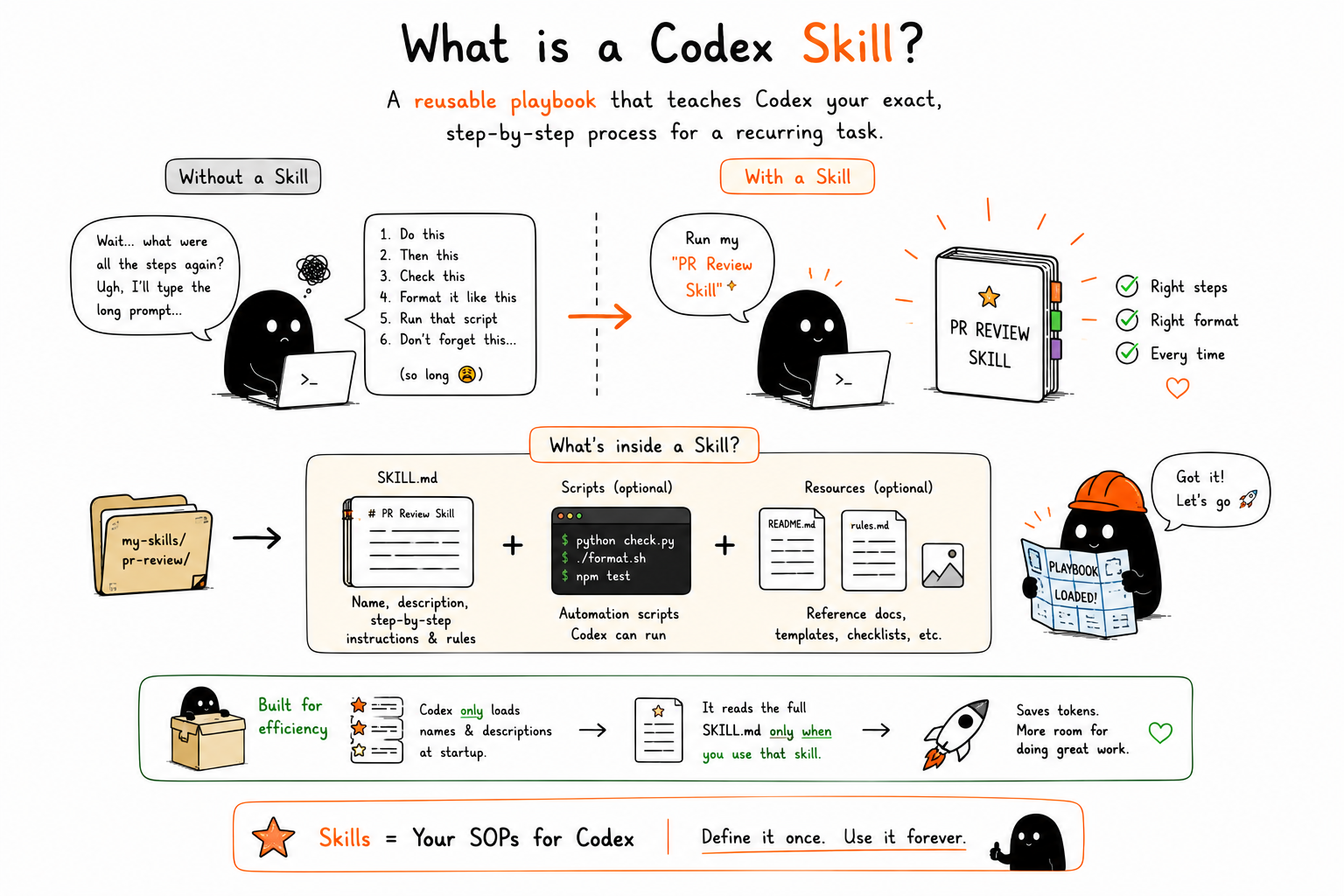
A skill is basically your personal playbook for Codex. Not a vague preference like "write good code please." A real reusable recipe. When I say "review this blog like a normie would read it," that should mean something specific. Keep the human voice. Cut the fog. Explain the hard thing with a picture. Do not turn my paragraphs into a LinkedIn staircase. Do not make me sound like a startup landing page wearing my face.
That is a skill.
It is me saying, "Here is how I work. Here is what I care about. Here are the mistakes I keep seeing. Next time, start from here."
And this is where Codex becomes less like a tool and more like a workshop that remembers where I put the screwdriver.
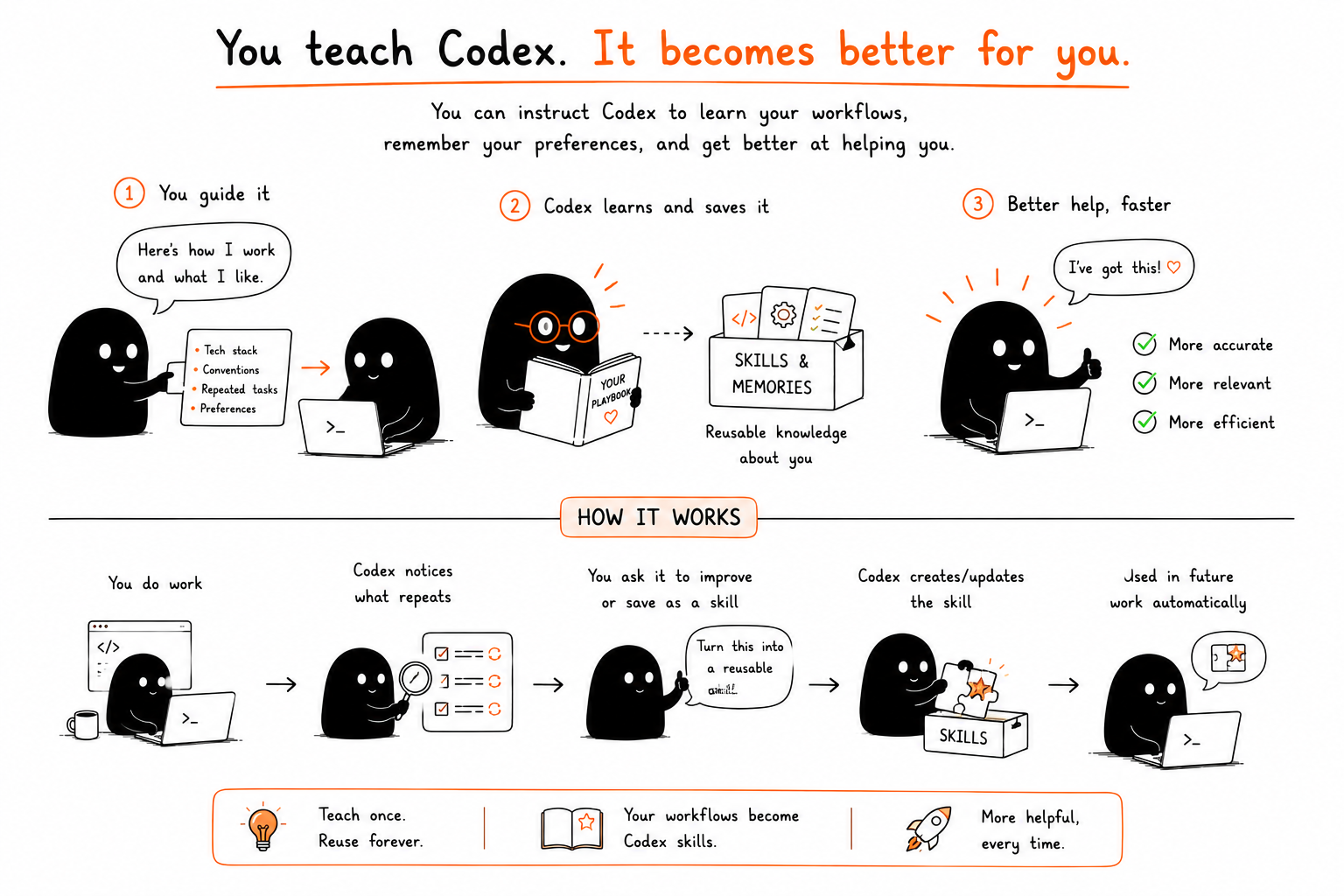
The funny thing is, the best part is not that Codex becomes smarter in some abstract way. The best part is that it becomes more mine. It learns the shape of my chaos. It learns which folders are sacred, which commands I trust, how I like handoffs, when I want a short answer, when I want the whole thing checked properly, and when I am clearly one more failed build away from becoming furniture.
Teach once. Reuse forever.
That sentence feels tiny, but it is the dream.
Because most of our computer work is not hard because it is genius-level work. It is hard because it repeats. The same setup. The same checklist. The same "please do not forget this weird rule." The same tiny context that lives in your head and nowhere else. Skills turn that hidden context into something Codex can actually use.
Everything so far has been Codex working through text and commands. Computer use is where it steps into the rest of the screen, and where things get a little spooky in a useful way.
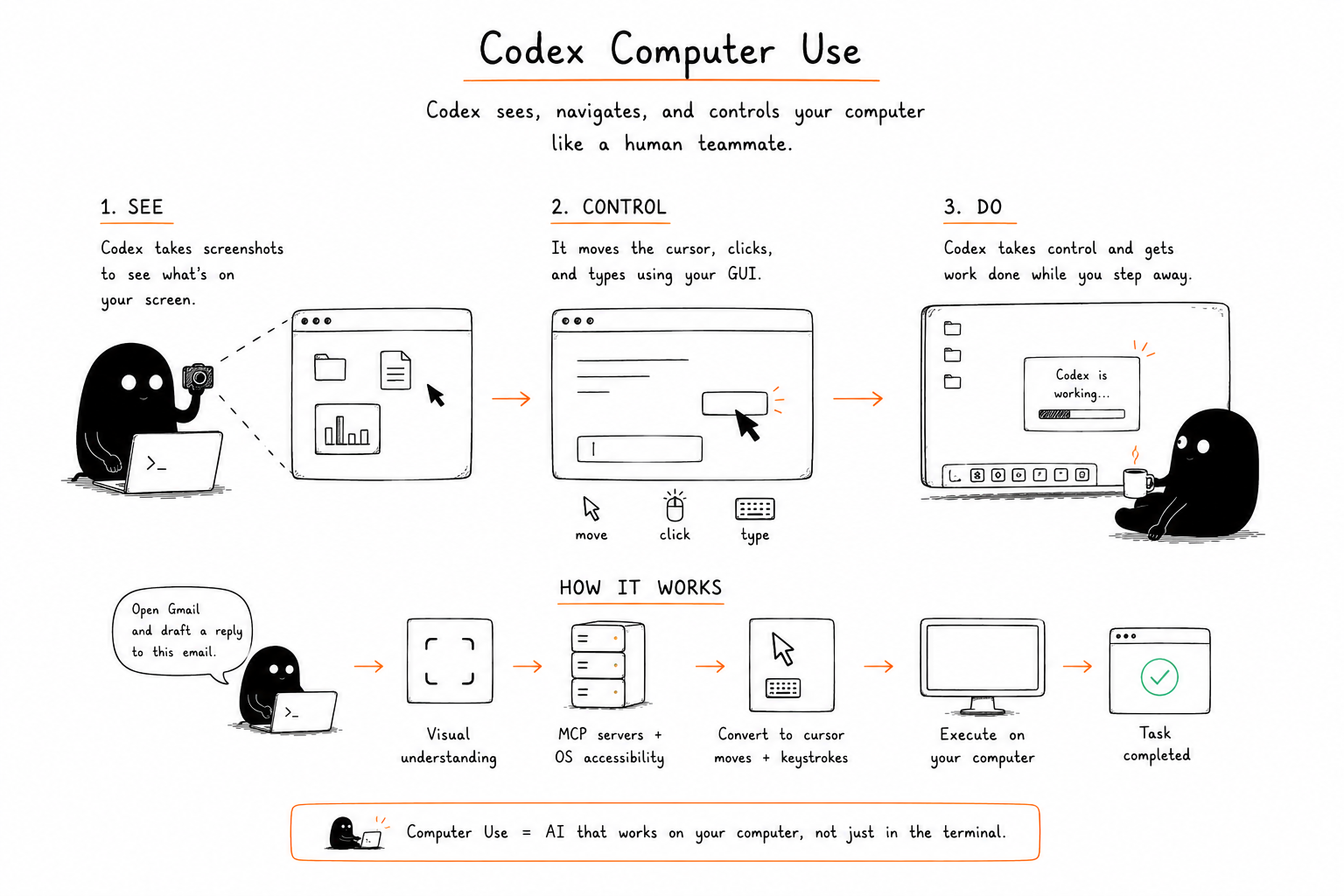
Terminal work is one world. But our real computers are messy visual places. Buttons, browser tabs, popups, files, apps, settings, dashboards, random windows that appear like they pay rent. Sometimes the job is not "edit this function." Sometimes the job is "open this thing, click there, download that file, check what the screen says, and tell me if it worked."
Computer use means Codex can see and control the computer more like a human teammate. It can look at the screen, move the cursor, click, type, and complete tasks that do not live neatly inside a terminal.
This matters because normal people do not live in terminals.
Even developers do not, really. We pretend we do, because it sounds cool, but then we spend half the day in browsers, dashboards, docs, and app settings like everyone else.
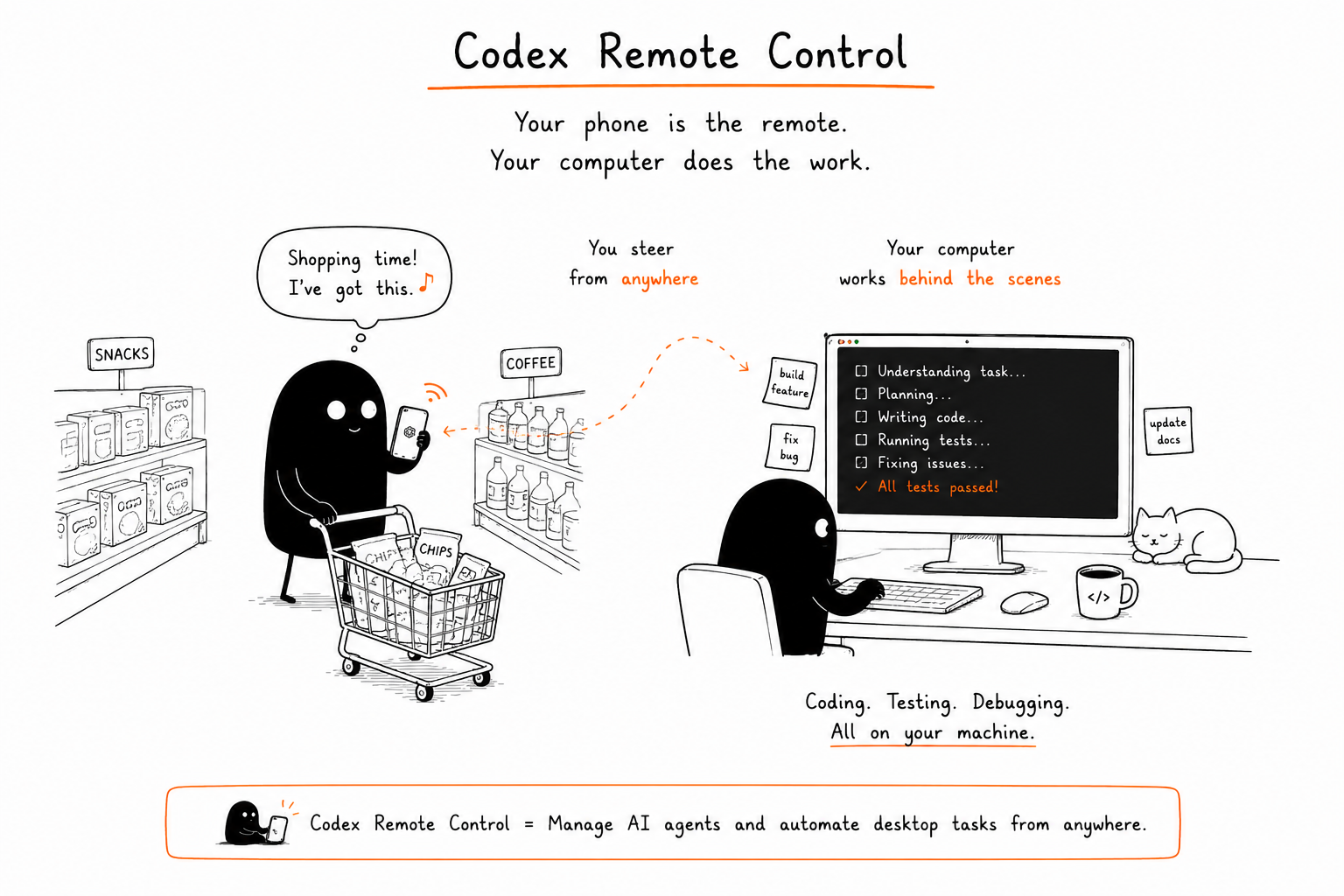
Remote control is the natural next step. Your phone becomes the steering wheel. Your computer does the heavy lifting at home. You can be outside buying snacks, pretending to be a balanced human being, while the machine is running the boring loop: understand task, plan, write code, run tests, fix issues, update docs.
This is the version of automation I actually want.
Not a cold robot replacing the human. More like a very patient workshop assistant who keeps working while I go live a small piece of my life.
Running an assistant like this is not free, though. And the way Codex handles running out has grown into its own little folklore — which honestly might be my favourite part.
There is Tibo.
Tibo is Thibault Sottiaux, the person who leads the Codex team at OpenAI, and somewhere along the way he became the reset king. The ritual: Codex users burn through their weekly usage. Everyone becomes dramatic. Then Tibo appears on X. Sometimes it is "Enjoy the weekend!" Sometimes it is "Let the tokens do incredible things today and have fun." On one memorable occasion his post opened with "Don't just reset Codex rate limits for fun, it costs money. Don't just reset Codex rate limits for fun, it costs money." — repeated twice, for emphasis — "...but the vibes are good." Then he reset them. For the vibes. Sam Altman himself once posted "if this tweet gets 1 like, tibo will reset codex rate limits." The tweet got 599,000 views. Tibo replied: "At some point I counted one like, so I went and did the thing."
And instantly the timeline changes temperature. People who were acting responsible five minutes ago start burning tokens like they found money in an old jacket. Suddenly every side project becomes urgent. Every test suite deserves another run. Every agent gets told to go again. Someone built an entire website — willcodexquotareset.com — that calls itself "UNOFFICIAL QUOTA METEOROLOGY." It monitors Tibo's vagueposting on X. It tracks the cooldown timer since the last reset. Its current verdict: "Stand by your tokens."
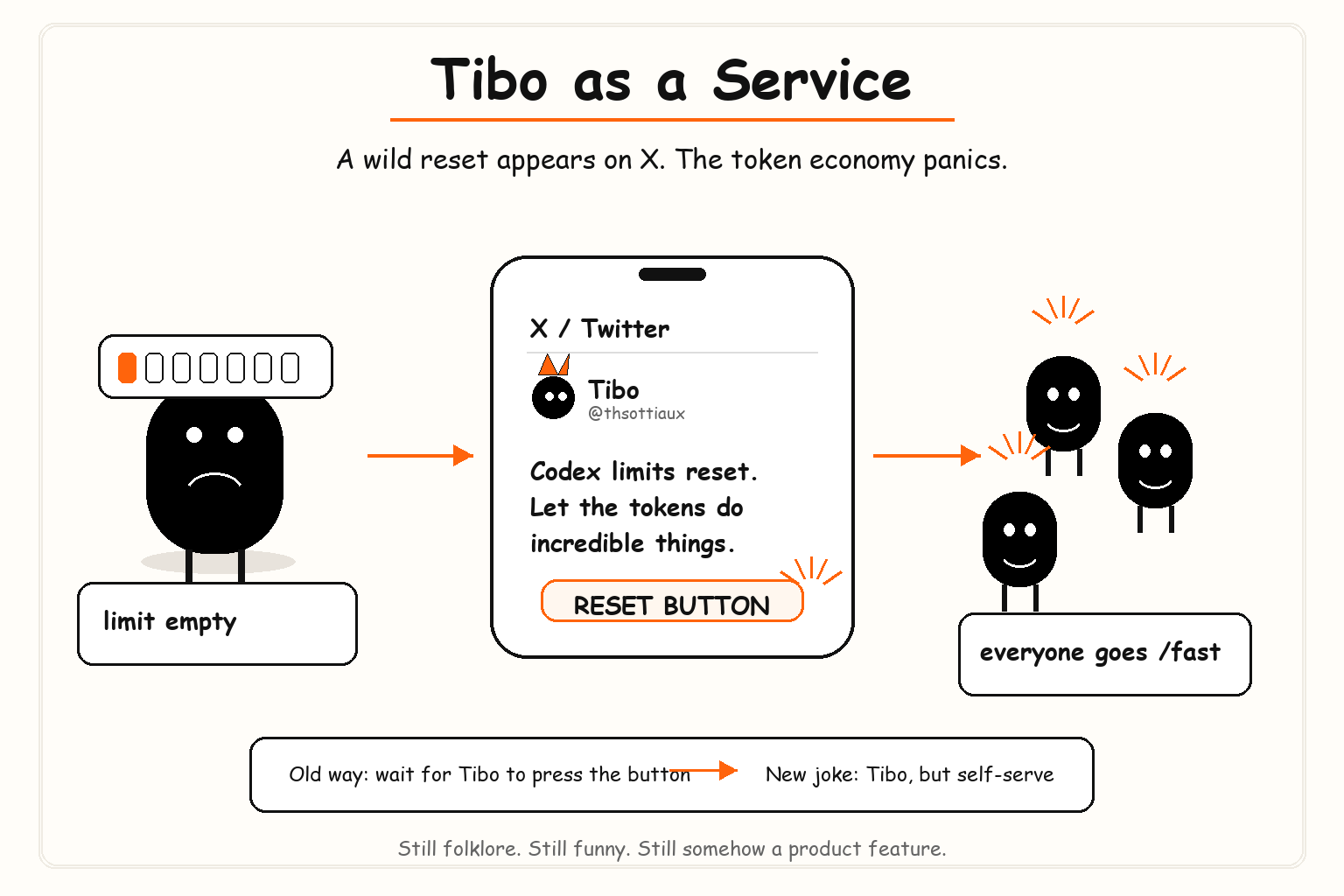
So when the reset bank showed up — announced as "Dearest gentle codexer. We did a sneaky double reset. Not only do you get a full reset on us. But you are also getting one into the reset bank to use at your own leisure. Enjoy." — the joke basically wrote itself: Tibo as a Service. Before, you waited for Tibo to press the big invisible button. Now you had your own tiny version saved in a pocket. That is Tibo. That is the lore.
But underneath the lore, I do not want to oversell any of this. None of it makes Codex magic. It is software. It will break. It will misunderstand. It will sometimes confidently walk into a wall and then explain the wall's architecture. We should keep our eyes open. We should test. We should review. We should not hand over our judgment and go take a nap for three years.
But still.
Something real is happening here.
For years, computers made us translate ourselves into their language. Be precise. Click the right place. Use the right command. Remember the right folder. Break the work into machine-sized bites. If you failed, that was your problem.
Codex feels like the computer trying, finally, to move a little toward us.
You say what you are trying to build. You explain how you like to work. You connect the tools. You give it a goal. You teach it your repeatable processes. And then this small black blob in the terminal starts doing the most beautiful thing software can do.
It helps.
Not perfectly. Not magically. But practically.
It turns the blank page into a plan. The plan into files. The files into tests. The tests into fixes. The fixes into a thing you can actually use. And somewhere in that loop, the computer stops feeling like a locked room and starts feeling like a workshop with the lights on.
That is why this is a love letter.
Because Codex understood what I was trying to build.
And then it picked up the tools.